

Ask someone to think of cinematic landscapes, and they might imagine the glittering New York skyline, the windswept deserts of Africa, or Monument Valley on the Utah-Arizona border. But nestled in the wide skies, wind-whipped grasslands, and rugged mesas of the Texas Panhandle lies an unsung hero of the silver screen: a region that’s lent its unique charm to a surprising number of Hollywood productions.
From dusty cattle ranches to eerie, endless prairies, to arguable the world’s greatest sunsets, the Texas Panhandle has quietly played host to some of the most memorable films and TV moments of the last several decades. Here's a look at five standout productions: Yellowstone, Cast Away, Indiana Jones and the Last Crusade, Hud, and Leap of Faith—and how the Panhandle's dramatic terrain helped shape them.
Yellowstone (2018-present)
@visitamarillo “Well thats why I got us a Hotel in Amarillo” Did you know Amarillo stars in Yellowstone Season 5? Visit iconic filming locationd like The Barfield Hotel and Paramount Recreation Club to see where the action unfolded. Add Amarillo to your travel list for a behind the scenes look at this hit series. 🎬: The Barfield Hotel 🎬: Paramount Recreation Club
♬ original sound - Yellowstone
Filming Locations: Amarillo, and the 6666 Ranch south of Borger, TX
Eagle-eyed Amarilloans were excited to see the historic Barfield Hotel on a recent episode of Yellowstone, including scenes shot in the hotel’s popular basement speakeasy, The Paramount Recreation Club.
Indeed, while the mega-hit series may be set in Montana, its Texas roots run deep—literally. The legendary 6666 Ranch, founded in the 1870s, is not just real estate—it’s mythic territory. Its vast plains and working cowboy crews provided an authentic backdrop that couldn’t be recreated on a soundstage.
Cast Away (2000)
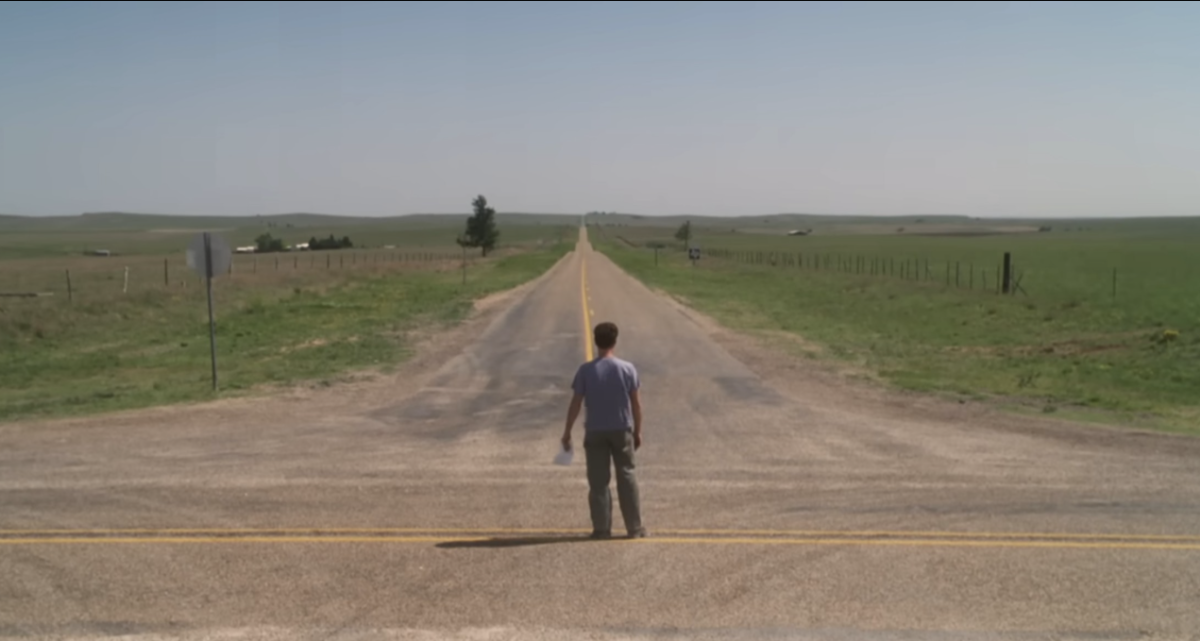
Scene from Castaway
Filming Location: Canadian, Texas
When people think of Cast Away, they generally picture an emaciated Tom Hanks marooned on a tropical island, talking to a volleyball. But the film’s final, haunting moments were shot far from the ocean—in the heart of the Texas Panhandle.
The sweeping crossroads scene at the film’s end was filmed on a lonely stretch of road near Canadian, a small town perched near the Canadian River in Hemphill County. It’s a moment devoid of dialogue but bursting with symbolism: Chuck Noland, fresh off his journey of survival and self-discovery, literally stands at a four-way intersection, pondering which road to take.
The stark beauty of the norther Panhandle—a dry, dusty flatland dotted with mesquite trees and power lines—feels like a frontier in its own right, echoing the vast solitude of the island, but with a distinctly American desolation. The iconic final shot captures a wide sky, a far horizon, and a solitary man at a life crossroads. It's the Panhandle at its most poetic—quiet, expansive, and existential.
Indiana Jones and the Last Crusade (1989)
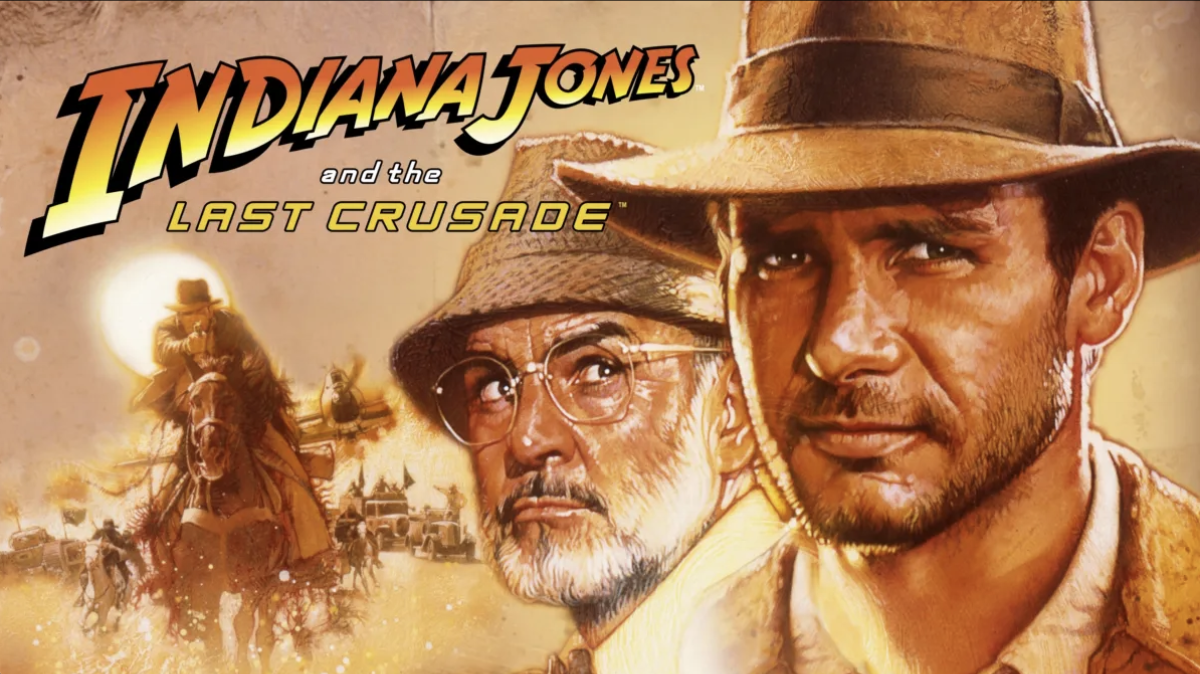
Filming Location: Palo Duro Canyon
And speaking of the unparalleled openness of the Panhandle vistas, we’d be remiss if we left out one of the most iconic endings in adventure film history. The globe-trotting action of Indiana Jones and the Last Crusade takes viewers from Utah to Venice to the Middle East—but it ends on a beautifully quiet note, with Indy and his companions riding off into the sunset. While this scene is set in modern-day Turkey, the Turkish sunsets weren’t quite epic enough. Instead, the scene was filmed on the rim of Palo Duro Canyon just south of Amarillo. This final scene, featuring Indiana Jones (Harrison Ford), his father (Sean Connery), Marcus Brody (Denholm Elliott), and Sallah (John Rhys-Davies) on horseback, gave the movie a classic Western-style ending, mirroring the film’s blend of swashbuckling and sentimentality.
So, why Amarillo? Director Steven Spielberg reportedly chose the Panhandle for its vast, unobstructed landscape and the quality of the natural light, which gave the shot its golden, dreamlike glow. It was a deliberate homage to the great Westerns of Hollywood’s past—especially those of Speilburg’s hero John Huston—and the scene provides an ending that feels both final and mythic.
Hud (1963)
Filming Location: Claude, Texas
No film better captures the stark beauty of the Texas Panhandle better than Hud. Starring Paul Newman at the peak of his powers, this black-and-white classic was filmed almost entirely in and around Claude, Texas, a small town east of Amarillo in Armstrong County. Directed by Martin Ritt and based on Larry McMurtry’s novel Horseman, Pass By, Hud tells the story of a feuding father and son on a struggling cattle ranch. The Panhandle’s tough, dry landscape is more than a backdrop—it’s practically a character in the film. The wide, empty spaces mirror the emotional distance between characters. The constant wind, blowing dust, and sun-bleached fields evoke a sense of decay and inevitability.
Shot on location at a real ranch, with long takes and minimal sets, the film exudes realism. The cinematography, which won an Oscar, takes full advantage of the Panhandle's natural light and vistas. Today, the courthouse in Claude still stands, as do several of the film’s exterior locations, offering fans a chance to walk in Newman’s boots.
Amarilloan Wes Reeves recalls: “These stories may be second hand, but I’ve heard many times that Paul Newman would go up to the paper at night to get baseball scores off the AP wire. [Note: We’ve also heard stories about Newman playing poker with the newsmen at the Amarillo Globe-News.] My wife Kim’s mom and her friend Ginger drove up to Claude to find Newman. They located his trailer and banged on the door until he walked out with a cig hanging out of his mouth. He signed an autograph on the back of one of their purses. Also my dad, who was in college at the time, claimed Newman would come to the student union building at West Texas State (now West Texas A&M) to get a feel for how cowboys walked.”
More than 60 years later, Hud remains a highwater mark for Texas filmmaking—and a love letter to a land as stark as it is beautiful.
Leap of Faith (1992)
Filming Location: Groom, Texas
Steve Martin’s underrated gem Leap of Faith depicts a very different slice of Panhandle life. In the film, Martin plays Jonas Nightengale, a slick-talking con man and traveling preacher who stages flashy revival meetings in small towns across the country. When his bus breaks down in the fictional town of Rustwater, Kansas, the “healer” is forced to spend more time in one place than he ever intended—and maybe even face a few real miracles.
The dusty, semi-abandoned feel of Rustwater was captured in Groom, a tiny town along I-40 known mostly for its leaning water tower and enormous roadside cross. For the duration of filming, Groom became Rustwater, complete with tent revivals, fake storefronts, and crowds of extras drawn from local residents. The film’s themes—faith, doubt, spectacle, and sincerity—are enhanced by the realism of its Panhandle setting. The open plains, stoic grain elevators, and small-town grit lend authenticity to the story in a way that a studio backlot never could. And Martin’s performance, brimming with charm and just enough sleaze, is grounded by the dusty roads and honest faces of Groom’s real-world extras.
That’s a Wrap
From Oscar winners to cult favorites, the Texas Panhandle has proven time and again that it’s more than just flyover country—it’s film country. Its wide horizons, cinematic light, and honest landscapes offer filmmakers a raw material that’s hard to fake and impossible to replicate.
So the next time you find yourself watching Yellowstone, Hud, or even Cast Away, pay close attention to the landscape. It’s not just background—often it’s the soul of the scene. And it just might be that that soul comes from the heart of the Texas Panhandle. The screen may fade to black, but out here, the story rolls on.
---
Want to visit these spots yourself?
Here are a few filming locations to add to your Texas Panhandle road trip:
Claude, TX: Visit the courthouse and ranchlands seen in Hud.
Canadian, TX: Stand at the crossroads where Cast Away ends.
Groom, TX: See the iconic leaning water tower and imagine Steve Martin’s revival tent fluttering in the wind.
The Barfield Hotel: Have a drink at the hotel’s basement speakeasy and pretend you’re a rancher on Yellowstone.
[SIDEBAR]
Why the Panhandle Works for Film
The Texas Panhandle isn’t just a pretty face; it’s a versatile performer. What draws directors to the region:
Uncluttered Vistas: The sky here doesn’t end. You can film a sunrise, a sunset, or a thunderstorm without competing with skyscrapers or forested hills.
Authenticity: Whether it’s a working ranch or a weathered main street, the Panhandle oozes American authenticity. It doesn’t have to be dressed up to look authentic—it already looks that way.
Economic Appeal: Lower costs, fewer regulations, and local enthusiasm make it a cost-effective choice for productions with tight budgets or tight timelines.
Community Support: Local residents often pitch in, from working as extras to hosting crews. Several Panhandle towns have welcomed Hollywood with open arms—and open roads.